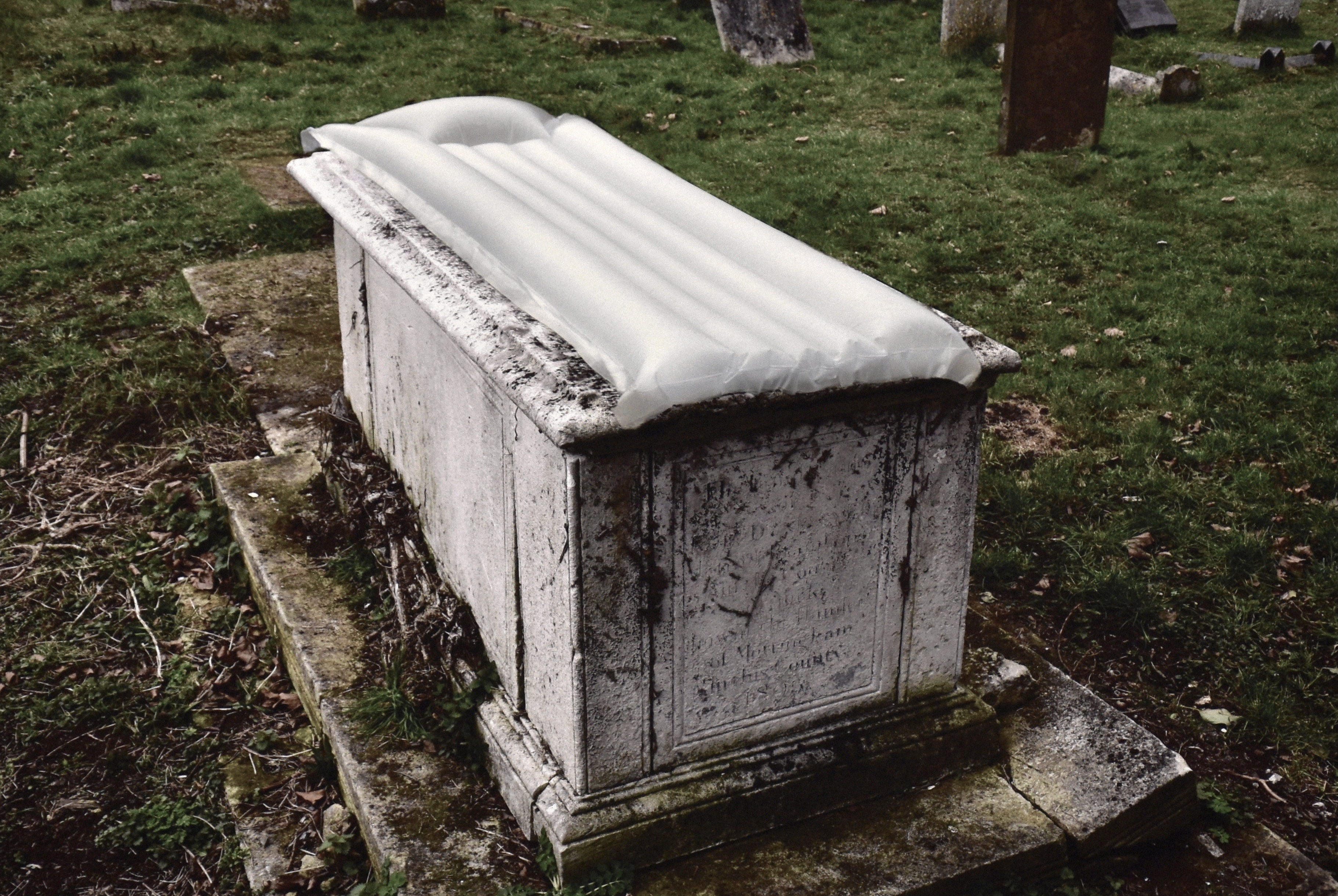
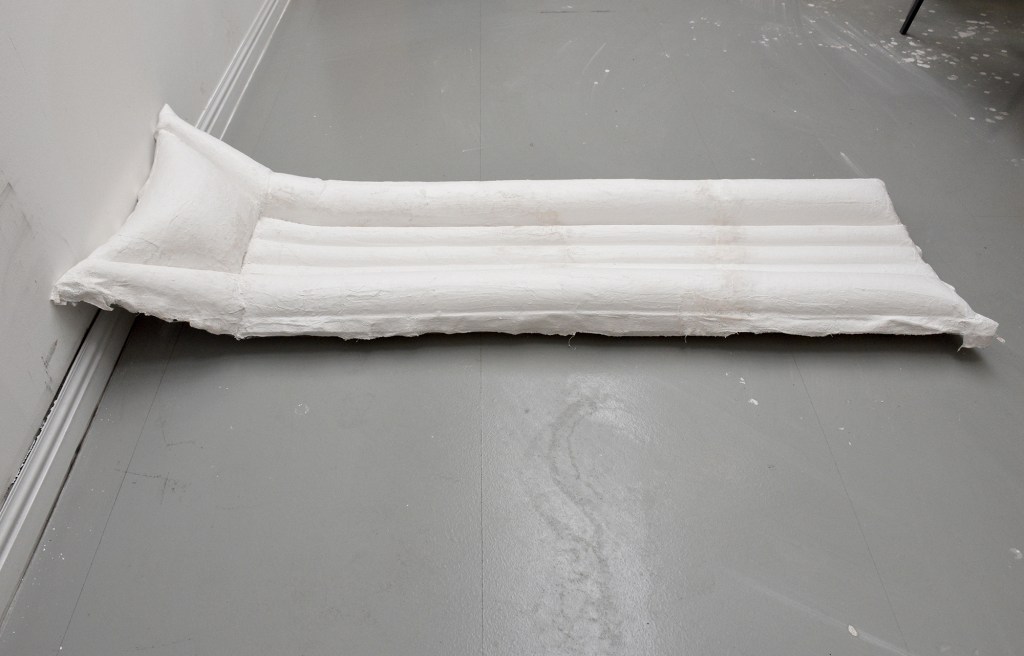
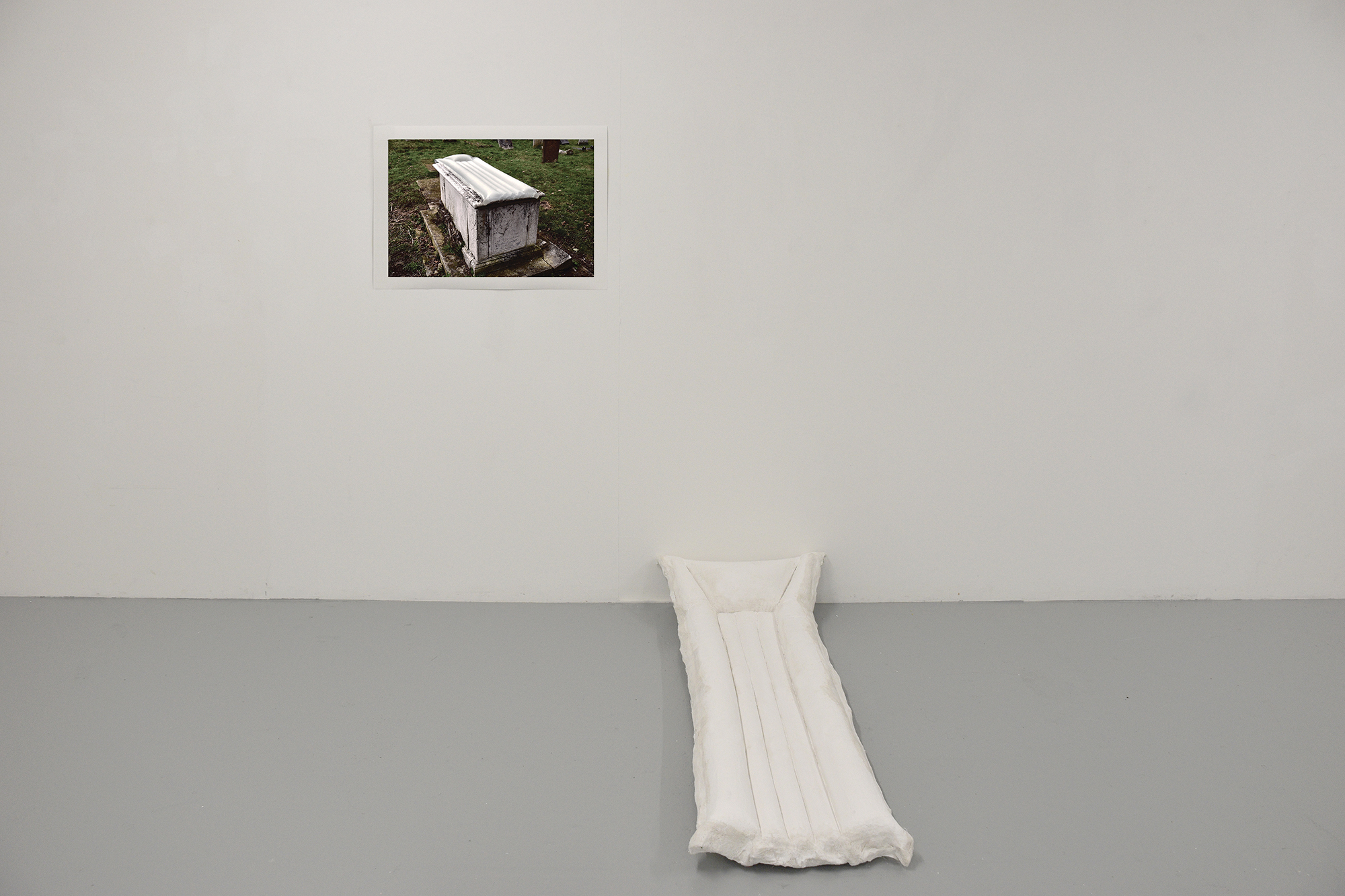

The project examines how memory is constructed beyond direct experience, as a process shaped by mediation, displacement, and reinterpretation.
Personal memory is continually informed by external sources—archival material, historical knowledge, and inherited narratives—particularly in relation to events that precede one’s own lifetime. Through these processes, memory extends into the realm of the imagined, producing experiences that are not directly lived but nonetheless felt.
When images lack clear temporal or contextual markers, they resist fixed attribution and become transferable across different subjects, places, and historical moments. In this condition, they function as sites of “other memory,” where individual, collective, and imagined histories converge.
A collateral time 2012 Installation project drawing 50 x 80 cm
The project develops through the spatial transposition of two video stills derived from film sequences dated 1939. Originally part of a private archive, the material is recontextualised through installation, shifting it from document to spatial experience.
The footage depicts scenes of leisure—swimming, diving—recorded in locations marked by the Second World War. These images appear disconnected from their historical conditions, producing a disjunction between representation and context. By isolating and re-situating these sequences, the work examines how historical material is mediated, inherited, and reinterpreted.
The installation forms part of an ongoing research initiated in 2012.

 annalisafurnari.com