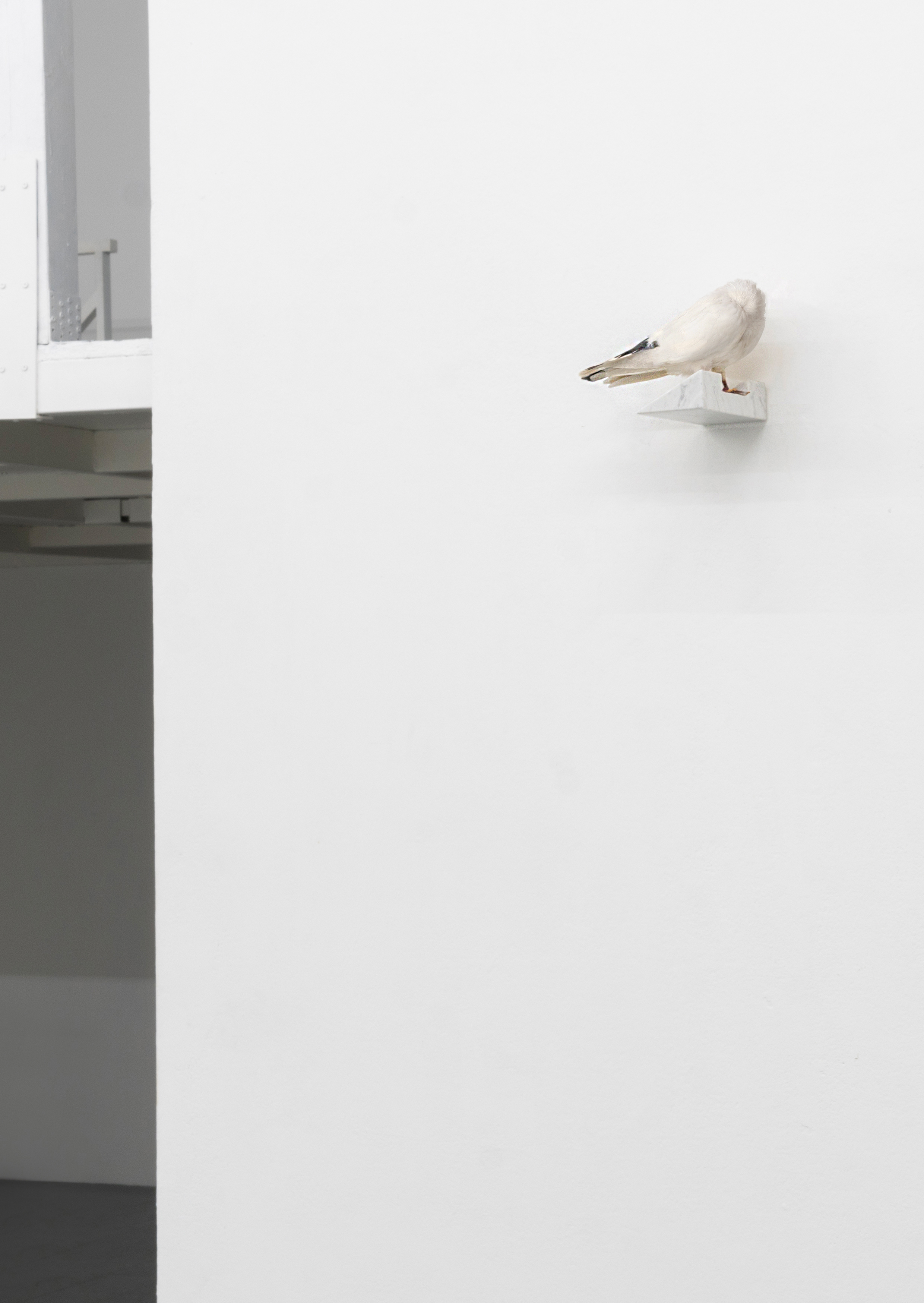
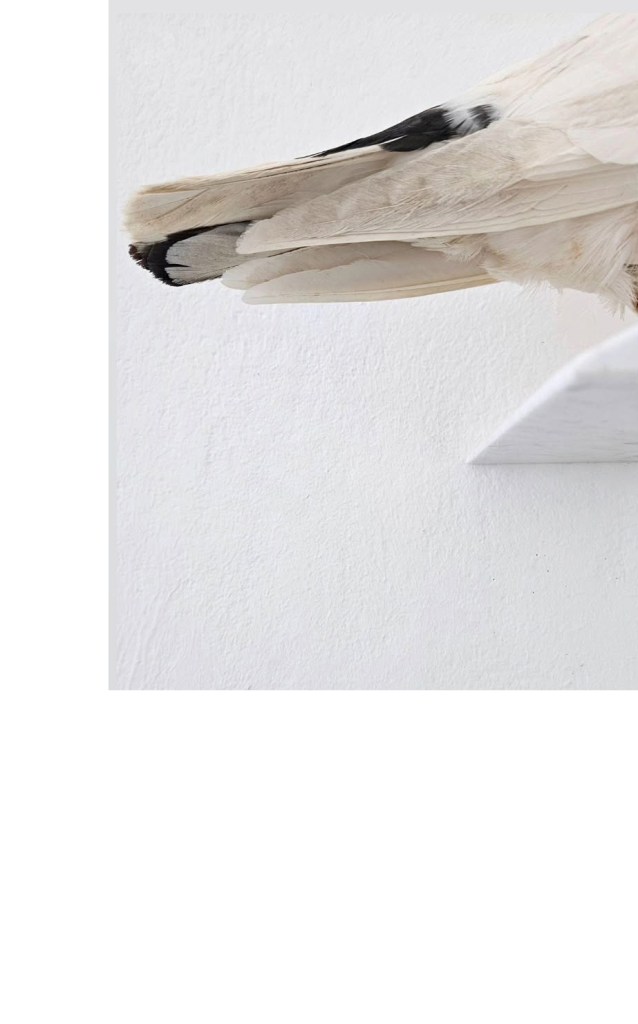
The work draws on the sleeping posture of birds, in which the head is withdrawn beneath the wing and the body expands to retain heat, temporarily dissolving the distinction between body and shelter.
This act of protection produces a condition of vulnerability. By suspending perception, the bird relinquishes control, becoming dependent on the stability of its environment. Survival is achieved not through vigilance, but through a temporary reduction of agency.
The work situates this state as a model of endurance in which risk is not avoided but inhabited. The boundary between body and environment remains unstable, negotiated through exposure rather than secured against it. In this condition, uncertainty is not exceptional but continuous, and endurance emerges through the capacity to remain within instability, accepting vulnerability as a necessary condition of persistence.
Held in memory as part of an environment where instability is continuous, the pigeon exists as an urban animal—common, overlooked, and always present. It endures across changing conditions, before, during, and after moments of rupture.
In this context, there is no narrative, but a body that persists within instability, remaining in proximity to its atmosphere through stillness, repetition, and material presence.
 annalisafurnari.com