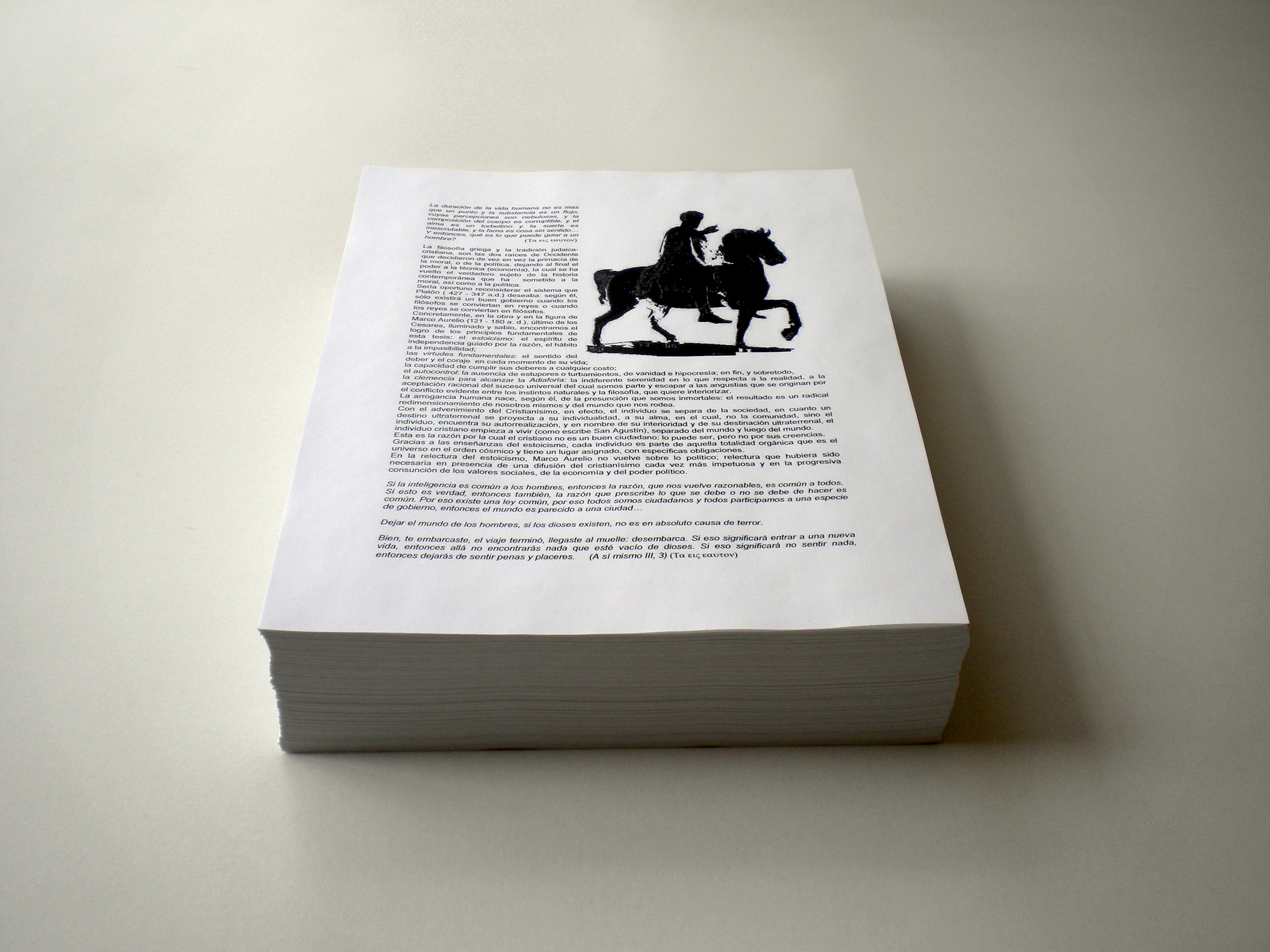
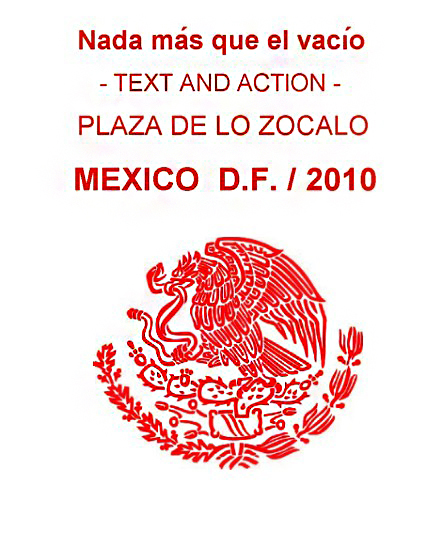
Nada más que el vacío (Nothing More Than Emptiness) is the title of a work produced in Mexico City during a residency programme in the summer of 2010. The title is drawn from a passage referencing the notion of good intuition in the philosophical reflections of Marcus Aurelius, whose thought—rooted in the teachings of Plato—asserts the fundamental interdependence of morality and politics as the basis for just governance. Within this philosophical lineage, moral life is conceived as necessarily secular, autonomous, and grounded in reason rather than doctrine. Marcus Aurelius warned against the subordination of civic ethics to religious belief, particularly Christianity, which he understood as a destabilising force when imposed upon public life. Such imposition endangers the very idea of citizenship by replacing collective responsibility and ethical self-determination with obedience to transcendent authority. In this sense, religious morality becomes a threat to the common good—not because of faith itself, but because of its structural incompatibility with plural civic life. What further prompted this reflection was my observation of a form of resistance embedded within the visual and ceremonial representations of the sacred in ornamental details, colours, symbols, the rhythms of religious celebrations themselves. This visual and performative syncretism revealed itself not as mere decoration, but as a subtle and enduring form of cultural survival.These hybrid representations suggest that colonisation, while violently imposed, was never entirely complete. Indigenous cosmologies, spiritual sensibilities, and symbolic languages continue to inhabit Catholic forms, reshaping them from within. The sacred becomes a contested space, where imposed doctrine and ancestral knowledge coexist in tension as a quiet but powerful refusal of total erasure, a way in which colonised cultures-maintained continuity under the guise of compliance. In this context, the colonial project appears not only as political domination but as an ongoing struggle over meaning, imagery, and moral authority The survival of Indigenous visual and ritual codes within Catholic practice reveals the limits of colonial power and the resilience of suppressed epistemologies.
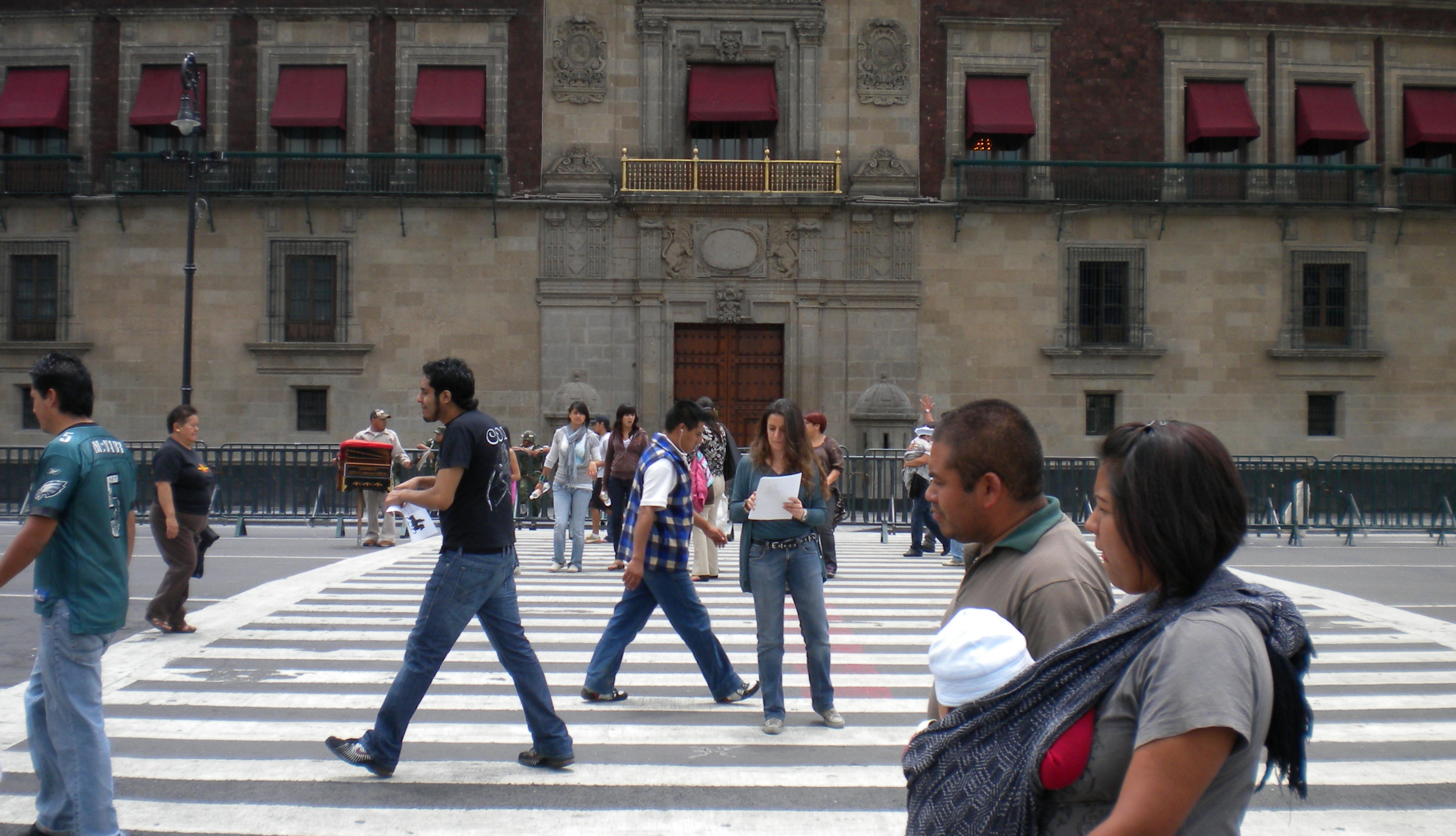
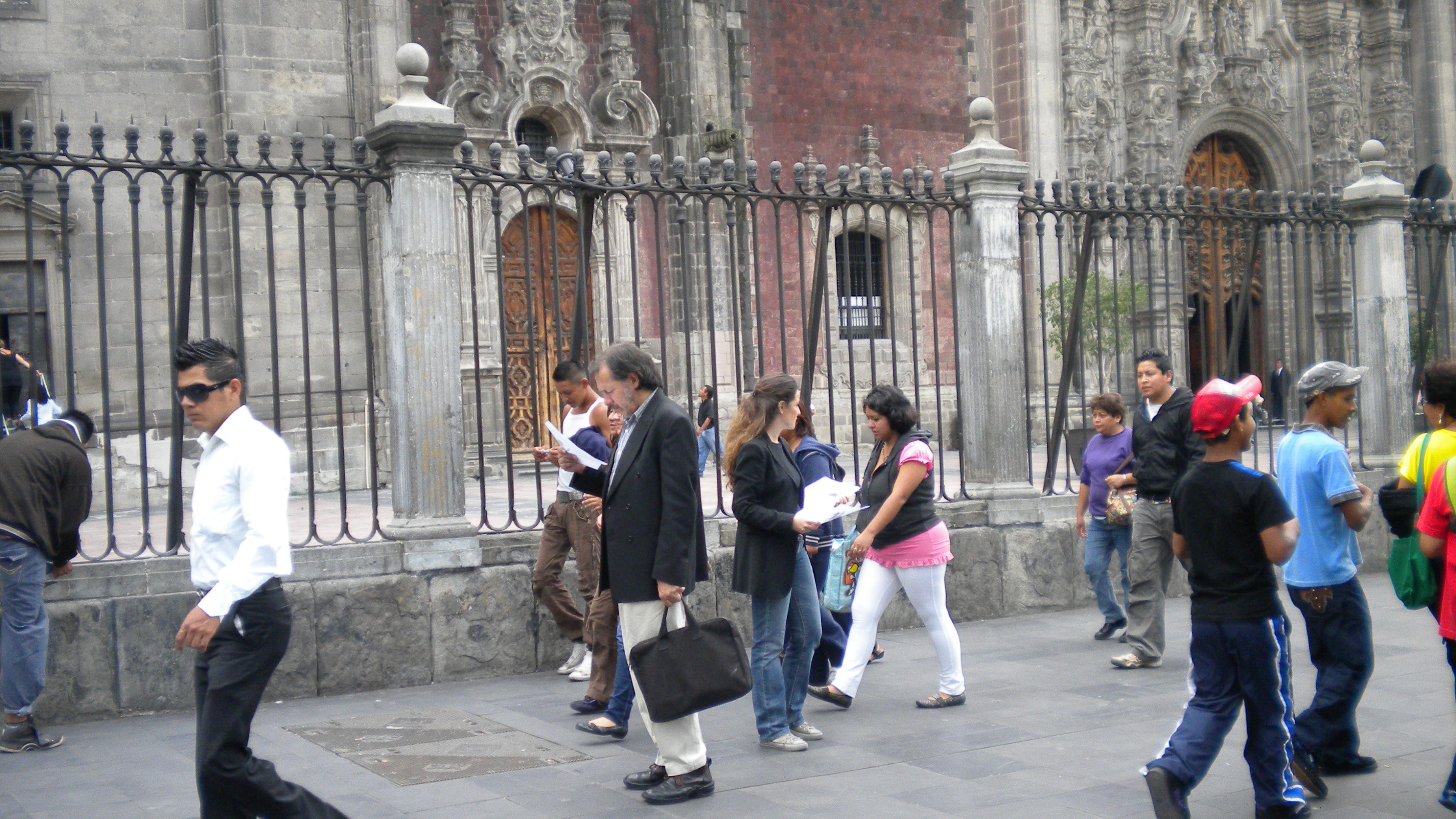
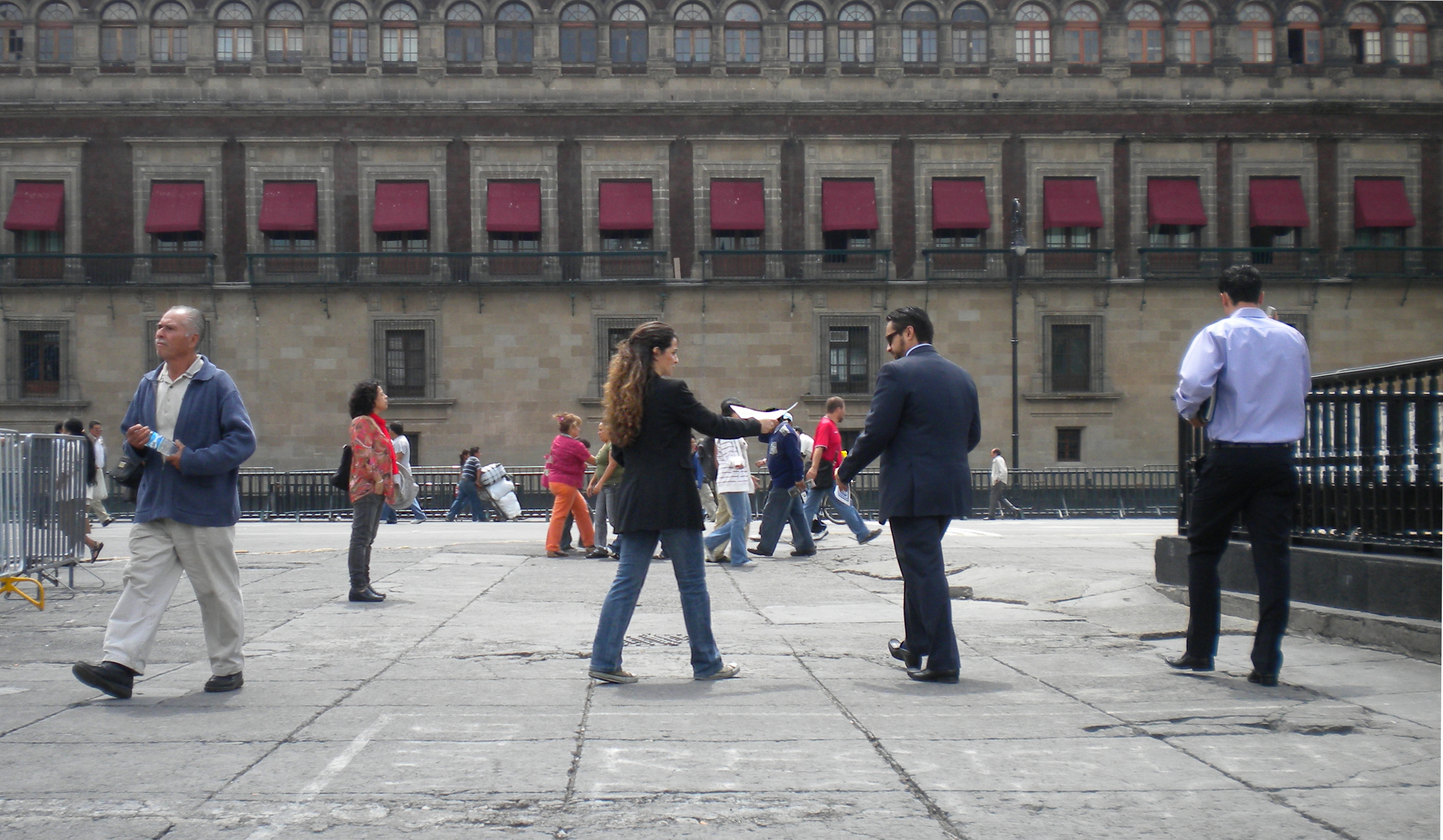
The work was realised through direct action in public space, involving the free distribution of a carefully translated Spanish text at sites of concentrated symbolic authority: the Metropolitan Cathedral of Mexico City and the National Palace. These sites—architectural embodiments of religious and state power—stand as material traces of colonial transformation, erected upon the suppression of pre-existing spiritual, philosophical, and civic systems. Placing a pre-Christian philosophical text within these spaces constituted a deliberate act of interruption. It sought to unsettle the apparent inevitability of Christian moral authority by exposing alternative genealogies of ethical thought—both European and Indigenous—that predate and challenge colonial religious domination. The gesture was not intended to negate faith, but to question the historical alignment of belief, power, and governance.

The duration of human life is nothing more than a point and substance is a flux, whose perceptions are nebulous, and the composition of the body is corruptible, and the soul is a whirlwind and fortune is inscrutable, and fame is a thing without meaning… And then, what is it that can guide a man? (Τα εις εαυτον)
Greek philosophy and the Judaeo-Christian tradition are the two roots of the West that from time to time decided the primacy of morality, or of politics, ultimately leaving power to technique (economy), which has become the true subject of contemporary history, which has subjected morality, as well as politics.
It would be appropriate to reconsider the system that Plato (427–347 B.C.) desired: according to him, only a good government will exist when philosophers become kings or when kings become philosophers. Concretely, in the work and in the figure of Marcus Aurelius (121–180 A.D.), last of the Caesars, enlightened and wise, we find the achievement of the fundamental principles of this thesis: stoicism: the spirit of independence guided by reason, the habit of impassibility; the fundamental virtues: the sense of duty and courage in every moment of his life; the capacity to fulfill his duties at any cost; self-control: the absence of stupors or disturbances, of vanity and hypocrisy; finally, and above all, clemency in order to attain Adiaphoria: the indifferent serenity with respect to reality, to the rational acceptance of the universal event of which we are part and to escape the anguishes that originate from the evident conflict between natural instincts and philosophy, which seeks to interiorize.
Human arrogance is born, according to him, from the presumption that we are immortal: the result is a radical re-dimensioning of ourselves and of the world that surrounds us.
With the advent of Christianity, in fact, the individual separates from society, insofar as an otherworldly destiny is projected onto his individuality, onto his soul, in which, not the community but the individual, finds his self-realization, and in the name of his interiority and of his otherworldly destination, the Christian individual begins to live (as Saint Augustine writes), separated from the world and then from the world.
This is the reason why the Christian is not a good citizen: he may be one, but not because of his beliefs. Thanks to the teachings of stoicism, each individual is part of that organic totality that is the universe in the cosmic order and has an assigned place, with specific obligations. In the rereading of stoicism, Marcus Aurelius does not return to the political; a rereading that would have been necessary in the presence of an increasingly impetuous diffusion of Christianity and in the progressive consumption of social values, of the economy and of political power.
If intelligence is common to men, then reason, which makes us rational, is common to all. If this is true, then also the reason that prescribes what one should or should not do is common.
For this reason there exists a common law, for this reason we are all citizens and all participate in a kind of government, therefore the world is similar to a city…
To leave the world of men, if the gods exist, is in no way a cause for terror. Well, you embarked, the journey ended, you arrived at the dock: disembark. If that will mean entering a new life, then there you will find nothing that is empty of gods. If that will mean feeling nothing, then you will cease to feel pains and pleasures. (To Himself III, 3) (Τα εις εαυτον)
 annalisafurnari.com